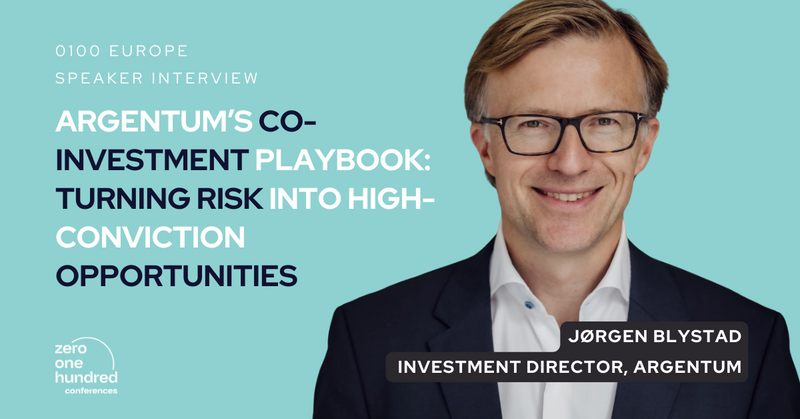
As the private equity landscape evolves, co-investments have emerged as a compelling strategy for LPs seeking greater control, reduced fees, and the potential for enhanced returns. In this exclusive interview, Jørgen Blystad, Investment Director at Argentum, shares insights into the firm’s co-investment philosophy, key selection criteria, and how Argentum mitigates risks while leveraging its deep GP relationships across Europe. From buyout strategies to ESG integration, Blystad sheds light on the nuanced approach Argentum takes to ensure long-term success in a competitive market.
Argentum is a specialized asset manager with over €3 billion in assets under management, dedicated exclusively to private equity since 2001. With deep expertise in evaluating and selecting top-tier private equity funds and fund managers—spanning both venture and buyout strategies—Argentum invests on behalf of the Norwegian state and a range of professional investors, including pension funds, foundations, and family offices.
What are Argentum’s key criteria when selecting co-investment opportunities?
Argentum searches for co-invest opportunities in high-quality assets with limited downside risk while still maintaining high upside potential, managed by GPs that we trust and have a strong track record.
What are the primary risks and benefits for limited LPs engaging in co-investments?
There are benefits as we see it in terms of having the opportunity to achieve alpha returns by selecting better-than-average PE investment cases and by reducing the typically high fees associated with PE.
Primary risks include possible negative selection, coupled with the fact that co-investments tend to have a relatively high investment size.
Argentum primarily focuses on buyouts with some allocation to VC funds. Are there differences in your approach when considering co-investments in these two types of funds?
We typically favor buyout cases, because we see better risk/return there. We have experience with VC co-investments quite far back in time, but have moved away from it since it is difficult to identify which companies that will emerge as future winners.
How does Argentum mitigate potential risks such as adverse selection, concentration risk, and execution challenges in co-investments?
We benefit from our extensive investment experience when doing our own considerations based on the GP’s due diligence. Our goal is to turn the concentration risk into a positive factor, investing only in high-conviction cases. We have a specialized team that works on co-invest opportunities, for smooth execution on our side.
Are there specific European markets or sectors where Argentum has developed a particularly strong network and expertise in co-investments?
I would say that we like companies that uses technology as a key part of the business model. In terms of geography, we are looking for the most attractive opportunities in Europe and have done co-investments in all of our key regions.
How do you identify and build relationships with GPs that align with Argentum’s co-investment strategy?
Argentum has a portfolio of about 100 GP relationships, where we constantly have our eyes open for co-investment opportunities.
How does Argentum integrate ESG considerations into its co-investment decision-making process?
ESG considerations is an integral part of our investment process, and we perform analysis of ESG factors before any investment.